

Flights from Singapore to Mumbai
SIN–BOM
Flying from Singapore to Mumbai brings together two cities that move fast in very different ways. This route often suits Indian families returning to Maharashtra, Gujarat, and other western states via Mumbai, professionals travelling between finance, shipping, tech, and trade networks, and students heading to a city known for universities, media, and business opportunity. From Singapore Changi Airport (SIN) to Chhatrapati Shivaji Maharaj International Airport (BOM), the journey is often about work, family ties, and reconnecting with India’s west coast energy.
- From
- Singapore — Singapore Changi (SIN)
- To
- Mumbai, India — Chhatrapati Shivaji Maharaj International (BOM)
- Distance
- 3920 km
- Typical flight time
- about 5 hours 30 minutes
Distance and flight time above are computed estimates for a direct flight, not a guarantee — the operating airline's own schedule is the authoritative source for any specific flight.
Why people fly Singapore to Mumbai
People travelling from Singapore to Mumbai usually have a clear purpose. Many are Indian expatriates visiting parents, attending weddings, celebrating family milestones, or returning for school admissions and extended stays. Business travel is also a major reason, especially for meetings linked to banking, investment, logistics, media, fashion, and start-up activity. Mumbai is also a practical arrival point for onward journeys into western India, while some travellers come simply to experience the city itself: its cinema culture, sea-facing promenades, old colonial-era districts, and food scene that runs from elegant dining rooms to beloved street snacks.
Best time to travel
Mumbai is shaped strongly by its seasons, so timing matters. The cooler period from around November to February is often the most comfortable for exploring neighbourhoods on foot, visiting the waterfront, and moving around the city with less heat. March to May can feel hot and humid, which suits travellers focused mainly on family or work plans rather than long days outside. The monsoon, usually from June to September, transforms the city with heavy rain and dramatic skies; some people love that atmosphere, while others prefer to avoid it. Festival periods such as Ganesh Chaturthi and Diwali bring a special local mood, busy streets, and memorable community celebrations.
Airports on this route
Singapore Changi Airport, with the code SIN, serves Singapore and is one of Southeast Asia’s best-known global air gateways, linking the city-state to major business and family travel corridors around the world. In Mumbai, Chhatrapati Shivaji Maharaj International Airport, code BOM, serves India’s financial capital and plays a central role for western India. It is the main air gateway for travellers heading into Mumbai itself as well as nearby parts of Maharashtra and broader commercial centres across the region.
What to see in Mumbai
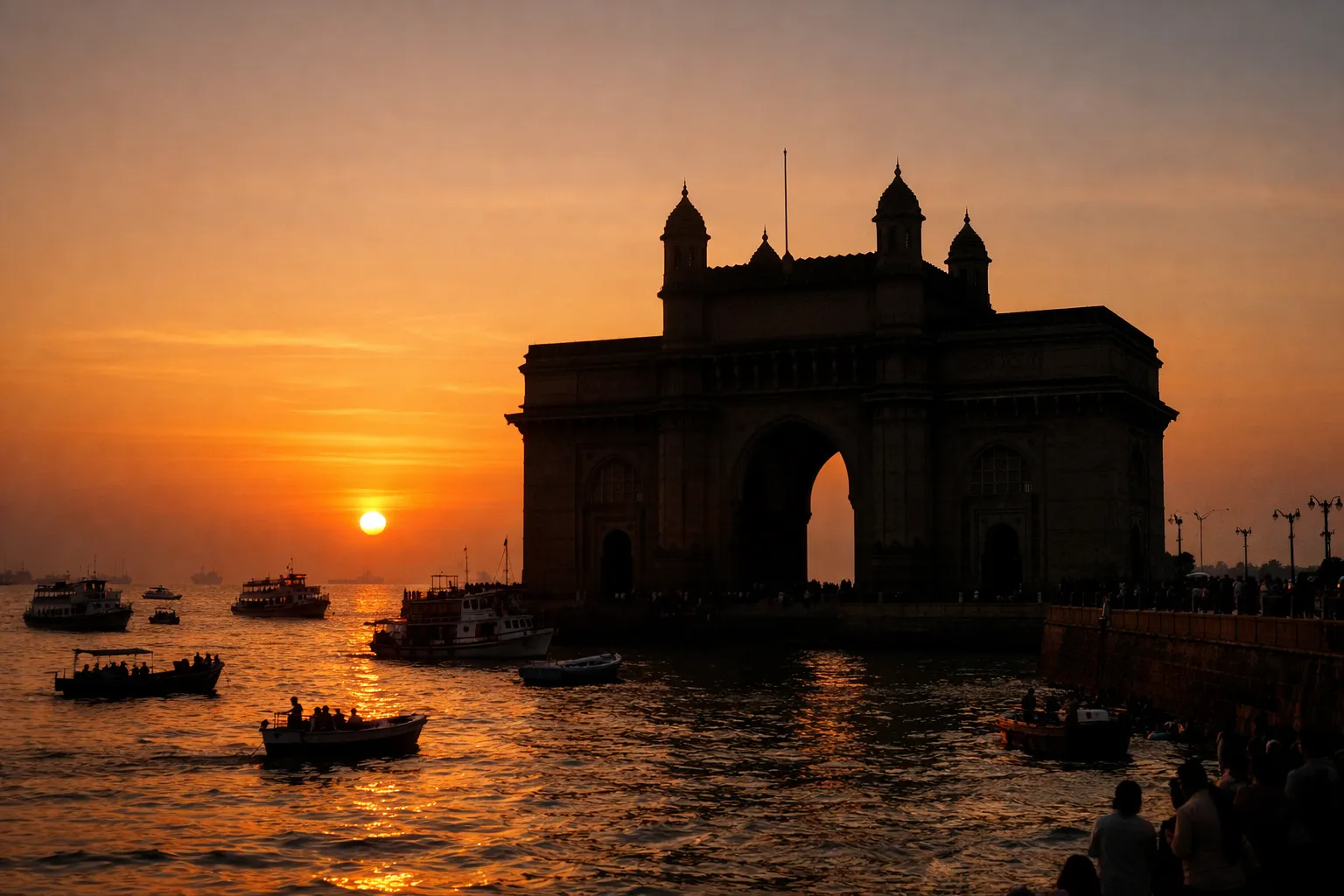
Mumbai is a city of distinct districts, each with its own rhythm. South Mumbai draws many first-time visitors with the Gateway of India, Colaba Causeway, Kala Ghoda’s galleries and heritage buildings, and Marine Drive’s sweeping curve along the Arabian Sea. Fort and Churchgate reveal the city’s older commercial heart, while Crawford Market remains full of everyday energy. Farther north, Bandra mixes stylish cafés, sea views, street art, and a strong creative scene, while Juhu is known for its beach and long-standing place in popular culture. For a deeper local feel, visitors often explore Dadar’s markets, Worli’s sea-facing roads, and Haji Ali’s striking setting. Mumbai’s food culture is part of the experience too, from vada pav and pav bhaji to seafood, Irani cafés, and classic sweets.
Planning tips
Mumbai rewards travellers who plan around purpose and location. If your trip is mainly for family visits, know which part of the city or suburbs you need, because Mumbai can feel very different from one neighbourhood to another. Business travellers often benefit from choosing time around major meetings and allowing space for the city’s fast-moving routine. For sightseeing, light clothing and comfortable shoes are useful, especially if you want to explore Colaba, Fort, Bandra, or Marine Drive on foot. During the monsoon, it helps to keep flexible plans and pack for wet weather. If festivals or wedding season are part of your visit, expect a more festive atmosphere across the city.
Frequently asked questions
Who usually flies from Singapore to Mumbai?
This route is often used by Indian expatriate families visiting relatives, professionals travelling for finance, trade, media, and technology work, and students heading to Mumbai for admissions or longer stays. It also suits travellers attending weddings, family events, and major cultural celebrations across Mumbai and western India.
Is Mumbai mainly a business destination or a leisure city?
It is both, but many travellers from Singapore come with a practical reason first. Mumbai is India’s financial and commercial centre, yet it also offers memorable neighbourhoods, sea views, heritage architecture, shopping streets, cinema culture, and a food scene that gives plenty to explore beyond meetings and family visits.
When is the most comfortable time to visit Mumbai from Singapore?
Many travellers find the cooler months from late autumn to winter the easiest for moving around the city and spending time outdoors. If you enjoy dramatic rain and a different side of urban life, the monsoon has a strong atmosphere, though it is better suited to flexible plans.
Which parts of Mumbai are good to explore for first-time visitors?
First-time visitors often start in South Mumbai, especially Colaba, Fort, Kala Ghoda, Churchgate, and Marine Drive, where many famous landmarks and heritage streets are close together. Bandra and Juhu offer a different side of the city, with cafés, shoreline views, shopping, and a more modern social scene.
What makes Mumbai different from Singapore for travellers?
Mumbai feels denser, louder, and more layered, with sharp contrasts between business districts, old neighbourhoods, seafront promenades, local markets, and creative areas. Singapore is known for order and polish, while Mumbai leaves an impression through its pace, personality, community life, and constant street-level movement.
Is Mumbai a good arrival city for visiting other parts of western India?
Yes, many travellers use Mumbai as an entry point for family visits and onward travel into Maharashtra, Gujarat, and nearby commercial or hometown centres. Even when Mumbai is not the final stop emotionally or practically, it often serves as the natural starting point for western India journeys.
What should I keep in mind before planning Singapore to Mumbai travel?
Think first about the purpose of your trip, whether it is family, work, studies, or time in the city itself. Then consider the season, especially heat or monsoon conditions, and the Mumbai neighbourhoods most relevant to you. Checking back at launch is the best next step for future updates.
More routes
The return route
Other routes from Singapore
Other routes to Mumbai
What happens next
Xen Trips has not opened bookings, and Mumbai is one of the routes being prepared for the network. When SIN to BOM flights go live, pricing and availability will be published here rather than announced elsewhere.